Anne Skyvington
  • Writing
    • Craft
      • Structuring a Short Story
      • Alternative Narrative Approaches
      • Genre in Writing
      • A Grain of Folly
        • Novel Writing
          • The Sea Voyage: a metaphor
          • How I Created My Debut Novel
          • What I learnt from writing a novel…
          • Memoir
            • Adriatic Romance … Rijeka to Titograd
            • Always something there to remind me…
            • Candidly Yours…
            • A Modern True Story
            • A Well-Loved Pet
          • Short Story
            • At the Swimming Pool
            • The Night of the Barricades
          • Poetry
            • a funny thing happened …
            • An ancient mystic: Rumi
            • A Window into Poetry
            • The Voice of T.S. Eliot
  • Publishing
    • A Change of Blog Title
    • 5 Further Publishing Facts
    • 5 Facts I Learnt About Self/Publishing
    • Highs and Lows of Self Publishing
    • A Perfect Pitch to a Publisher
    • A Useful Site for Readers and Indie Authors: Books 2 Read
  • Book Reviews
    • A Story of a Special Child
    • Discovering Karrana
    • A Young Adult Novel: My French Barrette
    • Randwick Writers’ Group: Sharing Writing Skills
    • The Trouble With Flying: A Review
  • Mythos
    • Ancient Stories from Childhood
    • Births Deaths and Marriages
    • Duality or Onenness: The Moon
    • The Myth of Persephone and Demeter
    • Pandora’s Box
    • 7 ancient artefacts in the British Museum
    • Symbolism of Twins
    • Voices From the Past
  • Australia
    • A Country College Residence
    • A Kit Home Goes Up in Vacy
    • A Sydney Icon or Two
    • 5 things about Coogee
    • Moree and Insistent Voices
    • Things To Do in Sydney
  • Travel
    • A Bird’s Eye View
    • A Tuscan Village Holiday
    • Back to Cavtat in Croatia
    • Travel to Croatia
    • 5 or 6 Things About Valencia
  • Guest Post
    • a father’s tale … by Ian (Harry) Wells
    • A Guest Poem: “First Loves” by Roger Britton
    • A Love Sonnet by Ian Harry Wells
    • “Snakey” by Roger Britton
    • Randwick Writers’ Group: Sharing Writing Skills
    • A Story of a Genteel Ghost told by Roger Britton
  • Psychology
    • Creativity and Mental Illness
    • Networking and Emotional Intelligence
    • C.G.Jung’s Active Imagination and the Dead
    • Psychology as a Field of Study
    • Western Influencers Down Through The Ages
  • Welcome
  • Contact

Anne Skyvington

The Craft of Writing

  • Writing
    • Craft
      • Structuring a Short Story
      • Alternative Narrative Approaches
      • Genre in Writing
      • A Grain of Folly
        • Novel Writing
          • The Sea Voyage: a metaphor
          • How I Created My Debut Novel
          • What I learnt from writing a novel…
          • Memoir
            • Adriatic Romance … Rijeka to Titograd
            • Always something there to remind me…
            • Candidly Yours…
            • A Modern True Story
            • A Well-Loved Pet
          • Short Story
            • At the Swimming Pool
            • The Night of the Barricades
          • Poetry
            • a funny thing happened …
            • An ancient mystic: Rumi
            • A Window into Poetry
            • The Voice of T.S. Eliot
  • Publishing
    • A Change of Blog Title
    • 5 Further Publishing Facts
    • 5 Facts I Learnt About Self/Publishing
    • Highs and Lows of Self Publishing
    • A Perfect Pitch to a Publisher
    • A Useful Site for Readers and Indie Authors: Books 2 Read
  • Book Reviews
    • A Story of a Special Child
    • Discovering Karrana
    • A Young Adult Novel: My French Barrette
    • Randwick Writers’ Group: Sharing Writing Skills
    • The Trouble With Flying: A Review
  • Mythos
    • Ancient Stories from Childhood
    • Births Deaths and Marriages
    • Duality or Onenness: The Moon
    • The Myth of Persephone and Demeter
    • Pandora’s Box
    • 7 ancient artefacts in the British Museum
    • Symbolism of Twins
    • Voices From the Past
  • Australia
    • A Country College Residence
    • A Kit Home Goes Up in Vacy
    • A Sydney Icon or Two
    • 5 things about Coogee
    • Moree and Insistent Voices
    • Things To Do in Sydney
  • Travel
    • A Bird’s Eye View
    • A Tuscan Village Holiday
    • Back to Cavtat in Croatia
    • Travel to Croatia
    • 5 or 6 Things About Valencia
  • Guest Post
    • a father’s tale … by Ian (Harry) Wells
    • A Guest Poem: “First Loves” by Roger Britton
    • A Love Sonnet by Ian Harry Wells
    • “Snakey” by Roger Britton
    • Randwick Writers’ Group: Sharing Writing Skills
    • A Story of a Genteel Ghost told by Roger Britton
  • Psychology
    • Creativity and Mental Illness
    • Networking and Emotional Intelligence
    • C.G.Jung’s Active Imagination and the Dead
    • Psychology as a Field of Study
    • Western Influencers Down Through The Ages
PoetryWriting

The Voice of T.S. Eliot

written by Anne Skyvington November 10, 2016
dante-alghieri

Eliot’s poem, “The Love Song of J. Alfred Prufrock“, and especially the second and third lines, are said to herald in modernism in poetry.  His is an excellent example of a unique voice. The voice reverberates from the words, almost jumping out of the page. It resonates for the reader, reaching out to decode the metaphorical content.

T.S. Eliot wrote this poem in 1910 when he was twenty-two years old. It was first published in 1915 at the instigation of Ezra Pound.

Eliot is a threshold figure, standing with one foot in the south of the United States and another in his adopted UK; his voice borrows from the classics, Dante, Tennyson, Shakespeare, the Bible, John Donne, and the French Symbolists, while at the same time proclaiming modernism.  Anyone who has ever studied English literature, especially in Anglo countries, would know this poem almost by rote, and would have been moved and changed by it. According to the Wikipedia article on the poem, above, it has become one of the most recognised voices in modern literature.

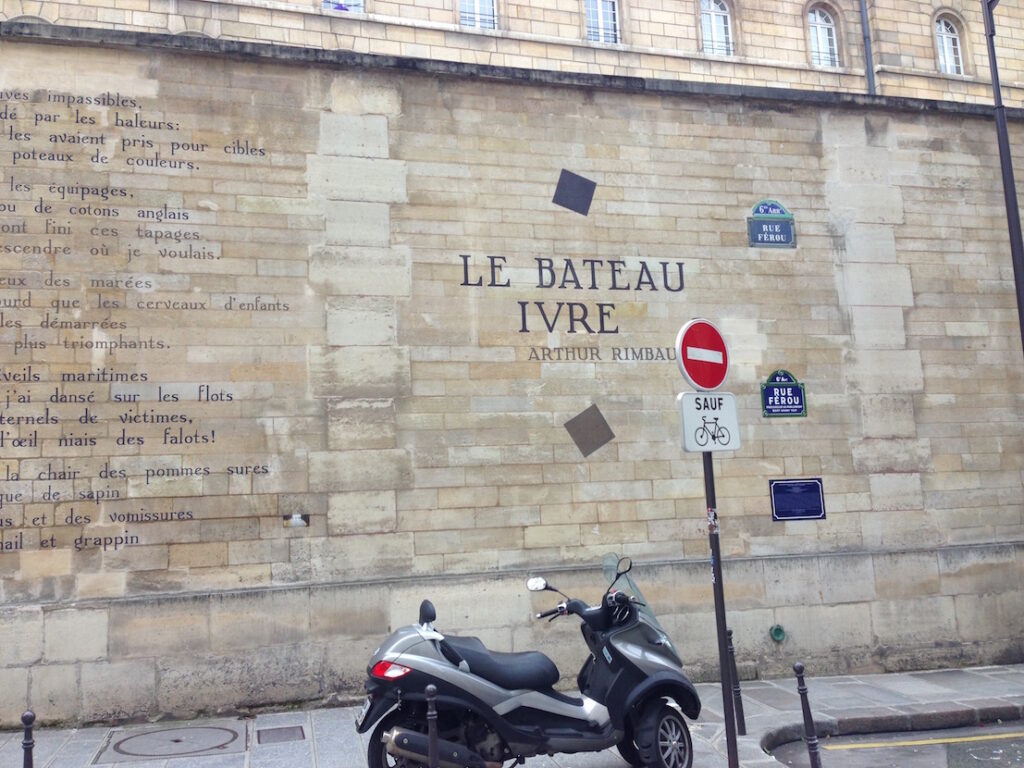
Another amazing aspect of this poem is its rhythm. You cannot help but be pulled along, almost mesmerised, by it. It reminds me in this of Le Bateau Ivre ( The Drunken Boat) by Arthur Rimbaud, written in 1871 by the then sixteen-year-old Rimbaud. Certainly, if you are lucky enough to know French, the poem has this mysterious rhythm that takes you with it until the end. This urban publication of Rimbaud’s poem  is on a wall in the sixth arrondissement, close to Saint Sulpice near my first address in Paris as a young woman.
poem-rimbaud-on-wall-parisBob Dylan, too, was inspired to write some of the words and images into his “Desolation Row“, which was also seen as a modernist breakthrough song.

Tim Miller in his literary blog “Word and Silence” alerted me to a recent BBC program about T.S. Eliot that will haul you in as it did me, I am sure. Many thanks, Tim.

Eliot is a threshold figure, standing with one foot in the south of the United States and another in his adopted UK; his voice borrows from the classics, Dante, Tennyson, Shakespeare, the Bible, John Donne, and the French Symbolists, while being at the same time “modern”.  Anyone who has ever studied English literature, especially in Anglo countries, would know this poem almost by rote, and would have been moved and changed by it. According to the Wikipedia article,  above, it has become one of the most recognised voices in modern literature.

What is amazing about this poem is its rhythm. You can’t help but be pulled along, almost mesmerised, by it. It reminded me in this of “Le Bateau Ivre” by Arthur Rimbaud, written in 1871 by the then sixteen-year-old Rimbaud.

Bob Dylan, too, was inspired to write some of the words and images into his “Desolation Row“, which was also seen as a modernist breakthrough song.

Tim Miller in his literary blog “Word and Silence” alerted me to a recent BBC program about T.S. Eliot that will haul you in as it did me, I am sure. Many thanks, Tim.

What better examples of voice than these two masters, Eliot and Dylan? With echoes of voices going back to Rimbaud and to the other French symbolists, and to Dante Alghieri
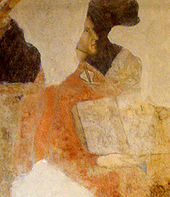
painting-dante-alghieri

A Painting of Dante Alghieri

The Voice of T.S. Eliot was last modified: August 21st, 2017 by Anne Skyvington
Bob Dylan's "voice"examples of unique literary voicesFrench symbolist poet Rimbaud's voiceT.S. Eliot's Prufrock a modernist prototype
2 comments
0
Facebook Twitter Google + Pinterest
Anne Skyvington

I have been a reader/writer all of my life as far back as I can remember. Blogging has opened me up to another world, where I can share my skills and continue to create through word and picture. Writing is about seeing the world and recreating it for others to see through different eyes.

previous post
Dear WordPress Bloggers
next post
Prufrock: Part I

You may also like

Prufrock: Part I

November 24, 2016

Hurrah Helen Garner!

March 2, 2016

Delphi and its Sacred Ways

August 28, 2016

Ocean Baths and Swimming Pools

October 13, 2013

Armidale Teachers College: the class of 1961-62

November 21, 2012

Finding Your Narrative Voice

October 24, 2016

Londinium

September 27, 2012

Alternative Narrative Approaches

March 27, 2013

Plot or Character?

February 18, 2013

The Parable of the Twins

January 22, 2016

2 comments

dinadavis2015 November 11, 2016 at 8:48 am

Thanks Anne for alerting us to the timeless work of two great poets, Eliot and Dylan, the latter now our latest Nobel prize winner for literature. I used to read the Waste Land to my kids at bedtime and they grew up loving Eliot’s poetry as does all our family. We had a huge poster of Bob Dylan in our kitchen back in the 70s and they grew up listening to his gravelly voice. My little boy asked once, how we were related to ‘Bob’. No doubt we could be, way back, both having our roots in European Judaism. Anne could you include the words of Pufrock as well as the beautiful videos? Dina

Reply
Anne Skyvington November 24, 2016 at 4:45 pm

Thanks for the suggestion, Dina. I’ll see what I can do. I didn’t realise that about Bob Dylan.

Reply

Leave a Comment Cancel Reply

About The Author

About The Author

Anne Skyvington

Anne Skyvington is a writer based in Sydney who has been practising and teaching creative writing skills for many years. You can learn here about structuring a short story and how to go about creating a longer work, such as a novel or a memoir. Subscribe to this blog and receive a monthly newsletter on creative writing topics and events.

Subscribe

Buy online from Amazon

In Australia you can purchase the book from Harry Hartog in Bondi Junction, from Amazon Australia and bookshops linked to IngramSpark


Included in Feedspot’s Top 30 for 2020

Top 30 Creative Writing Blogs, Websites & Influencers in 2020

This blog is Included in List of 100 Best Writers’ Sites 2019


The 100 Best Websites for Writers in 2019

Connect With Me

Facebook Twitter Google + Pinterest Linkedin Youtube Email

Recent Posts

  • The Night of the Barricades

    February 15, 2021
  • How I Created My Debut Novel

    July 4, 2020
  • Randwick Writers’ Group: Sharing Writing Skills

    May 7, 2020
  • 5 Further Publishing Facts

    April 1, 2020
  • 5 Facts I Learnt About Self/Publishing

    March 23, 2020

Categories

  • Writing
  • Craft of Writing
  • Publishing
  • Australia
  • Childhood
  • Nature
  • Travel
  • Poetry
  • Memoir
  • Emotions and Health
  • Book Reviews
  • Guest Post
  • Art
  • Politics

I’ve joined ALLI

About The Author

About The Author

Anne Skyvington is a Sydney-based writer and blogger. <a href="http://anneskyvington.com.au She has self-published a novel, 'Karrana' and is currently writing a creative memoir based on her life and childhood with a spiritual/mystical dimension.

Popular Posts

  • Randwick Writers’ Group: Sharing Writing Skills

    May 7, 2020
  • 5 Further Publishing Facts

    April 1, 2020
  • The Golden Ratio in Nature

    August 24, 2016

Subscribe

  • Facebook
  • Twitter
  • Linkedin

Copyright @ 2017 Anne Skyvington. All Rights Reserved. Site by gina.digital.


Back To Top